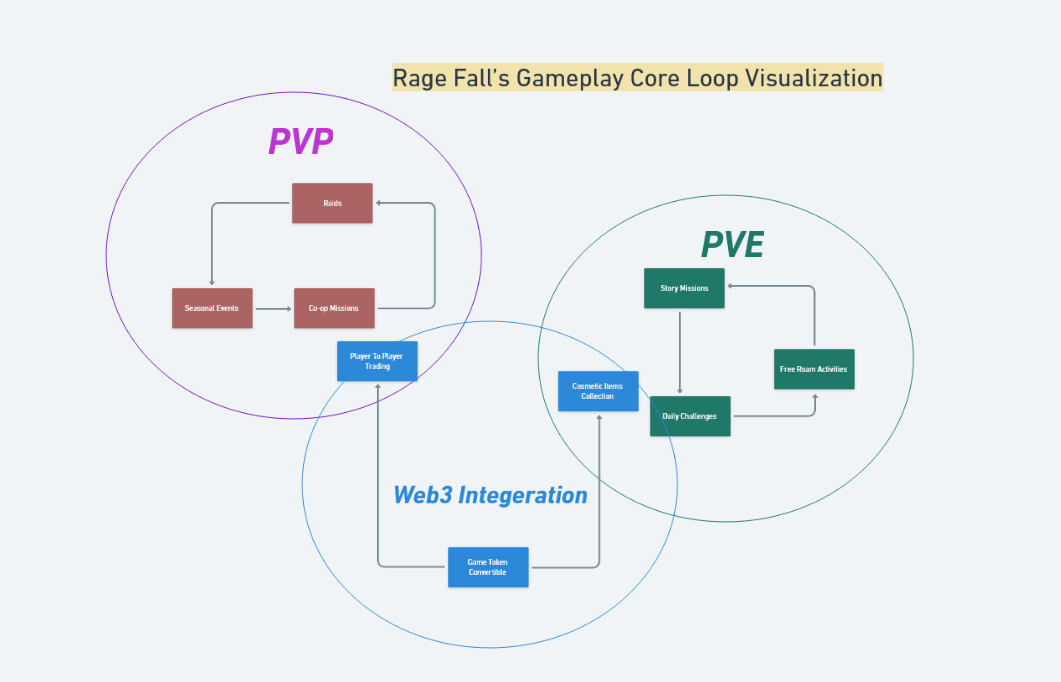
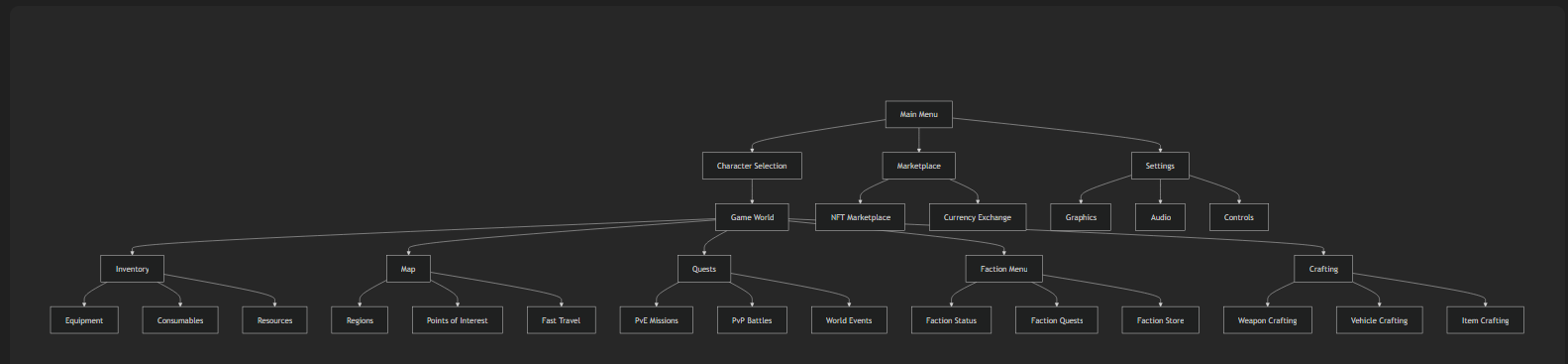
Core Elements of Web3 Integration
- Tokenization:
The in-game economy is connected to a cryptocurrency token that players can earn through gameplay and exchange for both real-world value and in-game currencies (Scraps and Tech Credits).
- NFTs:
Certain in-game items, characters, vehicles, and skins exist as NFTs, providing players with real ownership of digital assets. These can be traded, sold, or even transferred outside of the game ecosystem, giving them real-world value.
- Play-to-Earn (P2E):
Players are incentivized to play the game not only for progression but also for earning cryptocurrency and valuable NFTs. This model turns gaming into a revenue stream for players.
Token Integration: Game Token (GT)
1. Game Token (GT) Overview
- Description: GT is the game's core utility token listed on blockchain exchanges. Players can earn it through in-game achievements, completing missions, engaging in PvP, participating in events, or selling NFT items.
- Use Cases: GT can be exchanged for both in-game currencies (Scraps and Tech Credits), used for special in-game purchases, or traded for other cryptocurrencies/real-world money on decentralized exchanges.
- Acquisition:
- Play-to-Earn: Completing daily missions, high-level raids, or faction wars rewards GT based on performance and contribution.
- Trading NFTs: Players can sell or auction off NFT items or characters for GT in the in-game marketplace or external marketplaces like OpenSea.
- Staking: Players can stake GT tokens in-game, allowing them to earn passive rewards such as rare items, NFTs, or even exclusive game experiences.
- PvP Tournaments: Participating in ranked PvP modes allows players to win GT in tournaments, with top players earning significant rewards.
2. Exchange between GT and In-Game Currencies
- Conversion: Players can exchange GT for in-game currencies at a fluctuating exchange rate set by the game economy. For example:
- 1 GT = 10,000 Scraps
- 1 GT = 100 Tech Credits
- Cross-Economy Value: This system allows players to use real-world investments or earned GT to fast-track their progress in the game or purchase premium items, skins, and upgrades.
- Tokenization of Rewards: Rewards for high-level achievements like defeating bosses, capturing territory, or crafting rare items can come in the form of GT, providing players with real-world value for their in-game success.
NFT Integration
1. Item Ownership and Rarity
- NFT Items: Certain rare and powerful items, vehicles, skins, and cosmetics in the game are issued as NFTs, giving players true ownership. These items can be:
- Weapons: Legendary weapons with unique designs and stats.
- Vehicles: Exclusive class-based vehicles that are unique in appearance and have higher performance.
- Cosmetic Skins: Customizable character and vehicle skins that have no impact on gameplay but are highly coveted for their rarity and aesthetic.
- Blueprints: NFT crafting blueprints for rare items that can be used or sold to other players.
- Rarity Tiers: NFTs come in different rarity tiers (Common, Rare, Epic, Legendary), with Legendary NFTs being the most limited and valuable, both in-game and on the marketplace.
2. NFT Marketplace
- In-Game NFT Marketplace: The game features an integrated marketplace where players can buy, sell, and trade NFT items using GT or other cryptocurrencies.
- Direct Sales: Players can list their NFT items for a fixed price.
- Auctions: Players can auction off rare or legendary items, allowing others to place bids using GT.
- External NFT Platforms: Players can also take their NFT items outside the game and trade them on platforms like OpenSea or Rarible, which support the game’s blockchain.
3. NFT Characters
- Unique Player Characters: Some characters (or character customization elements) can be NFTs, allowing players to own their avatars as unique digital assets. This could be especially appealing for high-ranking players or streamers who want to sell their character to another player.
4. NFT Land Ownership
- Base Building and Land Ownership: Players can own and upgrade virtual land in the game world, represented by NFT parcels. These lands can have real value and be used for:
- Player Bases: Build and upgrade private or faction bases.
- Resource Harvesting: Own land that provides in-game resources, which can then be sold for Scraps, Tech Credits, or even GT.
- Renting or Selling: Players can rent out their land to other players for GT or sell it on the marketplace as an NFT.
Play-to-Earn Mechanics
1. Earning GT through Gameplay
Players can earn GT through a variety of in-game activities:
- Quests and Missions: Completing high-tier missions and end-game raids.
- PvP Rewards: Ranked PvP matches, tournaments, and faction wars reward players with GT based on performance and ranks.
- Territory Control: Owning and defending territories in the game’s open world can generate passive GT income.
- Crafting and Selling: Crafting rare items or vehicles can be a profitable venture. Players who specialize in crafting can sell NFTs or in-game items for GT.
2. Staking and Governance
- Staking Mechanism: Players can stake GT tokens to earn passive rewards like rare NFTs, in-game currency bonuses, or governance rights (voting on game development changes, events, or features).
- Governance Tokens: Top stakers may receive special governance tokens that allow them to influence in-game economic policies, decide on new content, or even propose game balance changes.
3. Sponsored Events
- Sponsored Tournaments: Game developers or third-party sponsors can host special PvP tournaments or PvE events where large amounts of GT, NFTs, or real-world prizes are up for grabs.
Monetization Elements
1. In-Game Purchases
- Tech Credits Purchases: Players can buy Tech Credits using real money. Tech Credits can be used for premium items, cosmetic upgrades, faster progression, and crafting boosts.
- Cosmetic NFTs: Special skins, vehicle designs, and character cosmetics can be purchased directly as NFTs using GT or Tech Credits. These cosmetics have no gameplay impact but hold real-world value due to their rarity and exclusivity.
- Blueprint Packs: Players can buy blueprint packs that contain random or guaranteed NFT blueprints for crafting rare items.
2. NFT Sales
- Direct Sales and Auctions: The game developer can mint and sell exclusive NFTs (legendary weapons, rare skins, unique vehicles) through direct sales or limited-time auctions.
- Event-Exclusive NFTs: NFTs tied to special events or seasonal content can be sold to players. These might include commemorative skins, unique avatars, or exclusive vehicles that have lasting value.
3. Subscription Model (Optional)
While the game could operate on a free-to-play basis, there could be an optional subscription tier that provides:
- Monthly Allotment of GT: Subscribers receive a set amount of GT or Tech Credits monthly.
- Exclusive Access: Subscribers might get early access to new areas, dungeons, or raids, as well as exclusive cosmetic NFTs.
- Discounts on In-Game Purchases: A subscription could provide discounts on premium items, NFT packs, and more.
4. Event Passes
- Battle Pass Style Progression: The game could have seasonal event passes that allow players to earn both premium cosmetic NFTs and GT as they progress through levels. Completing objectives would unlock skins, mounts, and other unique rewards.
Original design diagrams
These diagrams preserve the original concept, including its proposed Web3 connections.